The National Court annuls the AEPD’s guide on biometric time tracking: what changes for companies?
The National Court annuls the AEPD’s guide on biometric time tracking: what changes for companies?
The recent ruling by the National Court has brought about a significant change in the field of time tracking and data protection. The court has annulled the guide published by the Spanish Data Protection Agency (AEPD), which established highly restrictive criteria for the use of biometric systems, such as fingerprint scanning or facial recognition, in employee working time records.
This ruling opens up a new scenario for companies that use or were considering implementing biometric attendance control solutions.
However, it is important to clarify that the judgment does not remove the obligations established by the General Data Protection Regulation (GDPR), nor does it constitute automatic authorization to use this type of technology in all circumstances.
What has the National Court ruled?
The ruling upholds the appeal filed by the Spanish Association of Security Companies (AES) and considers that the AEPD’s guide went beyond the merely informative nature that corresponds to this type of document. In practice, the guide had come to be used as an almost binding criterion for assessing the legality of biometric systems.
With its annulment, this specific interpretative criterion is removed, although the legal framework governing the processing of biometric data remains unchanged.
What does this ruling mean for companies?
The ruling allows companies to reconsider the use of biometric systems within their time tracking and access control projects, provided that their implementation complies with data protection regulations.
The use of technologies such as fingerprint recognition or facial recognition must continue to be assessed on a case-by-case basis, taking into account factors such as necessity, proportionality, system security, and the safeguards required for the processing of this type of data.
A key moment for time and attendance management
The ruling comes at a particularly relevant time, coinciding with the future implementation of the new digital time recording system promoted by the Ministry of Labour.
The draft regulation aims to strengthen key aspects such as:
The use of digital time recording systems.
The personal and direct identification of each employee.
The authenticity and integrity of records.
The traceability of any changes made.
The retention of data for four years.
Immediate access to information by the Labour Inspectorate when required.
In this context, companies are looking for solutions that combine ease of use, security, and regulatory compliance.
Solutions tailored to each organisation
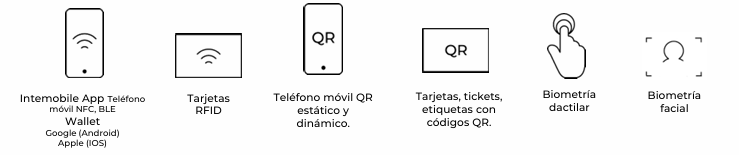
Not all companies have the same needs. Factors such as the number of employees, shift rotation, multiple workplaces, or the required security levels make it advisable to have different identification methods available.
The ability to combine different technologies allows each installation to be adapted to the organisation’s specific needs and to current legal requirements.
Instel and Intemo Technologies: technology for more efficient time and attendance management
Our experience as system integrators enables us to provide customised solutions for different industries, combining security, operational efficiency, and ease of management.
The cancellation of the AEPD guidance opens up new opportunities to consider biometric systems in environments where they can provide added value, always through a responsible approach aligned with current regulations.
The transition towards a more digital and connected time management environment is already underway. Having solutions prepared for these new scenarios will allow companies to face this change with greater security and confidence.
.
Would you like to upgrade your company’s time and attendance system?